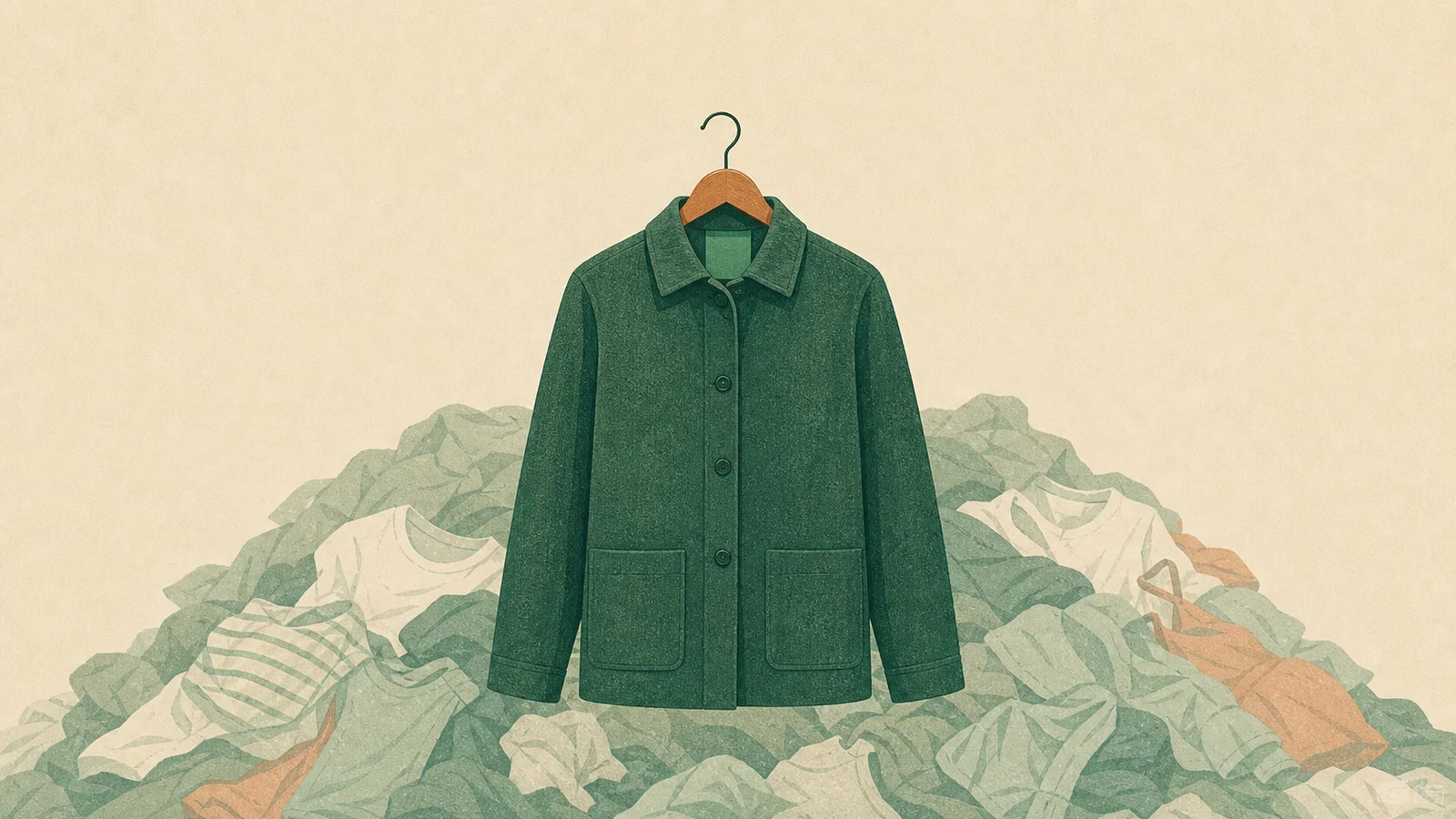
A T-shirt for three euros, a complete outfit for twenty: platforms like Shein and Temu have made buying clothes so cheap in recent years that price is barely a decision any more. And that is precisely the point. Buy a garment for a couple of euros and, on average, you will wear it less often, wash it more carelessly or throw it away sooner — and then buy the next one. This cycle now has a name: ultra-fast fashion. It is not merely a matter of taste; it has tangible consequences for the environment, your wallet and your wardrobe.
This article is not here to moralise. Nobody has to justify a cheaply bought shirt. But a few things are worth knowing: why the bargain rack is often more expensive than it looks, how to recognise better quality, and how to treat clothes so they last longer.
What sets ultra-fast fashion apart from classic fast fashion
Fast fashion has been around for decades: rapid collections, low prices, shops on every high street. Ultra-fast fashion takes the model to its extreme. Retailers like Shein and Temu add thousands of new items to their shops every day, produce speculative micro-batches, and ship goods straight from China to the customer as small parcels. According to the European Commission, around 4.6 billion such low-value parcels entered the EU single market in 2024 — an estimated 91 per cent of them from China.
That speed comes at a cost. A test by the Upper Austrian Chamber of Labour (Arbeiterkammer) together with the environmental NGO GLOBAL 2000, reported by the public broadcaster ORF among others, found harmful substances in spot-checked items from Shein and Temu — PFAS (so-called forever chemicals), plasticisers and heavy metals — in some cases at levels many times above the limits permitted in the EU. Of roughly 20 garments tested, several would not even have been cleared for sale in the EU, according to these reports. That does not mean every cheap item is contaminated, but the gap in oversight is real: order directly from a third country and you are largely buying past European market surveillance.
Something is shifting economically, too. The Austrian Retail Association (Handelsverband) puts the damage to domestic retail from misdeclared parcels and dodged duties at several billion euros and is calling for a law against ultra-fast fashion. From July 2026, the EU plans to levy a charge on small parcels under €150, and the customs duty exemption itself is set to fall in 2028. The era of limitlessly cheap direct imports is drawing to a close either way.
The true price ends up in the bin
You can see the consequences at the end of the chain. According to the Umweltbundesamt, Austria's federal environment agency, around 221,800 tonnes of textile waste are generated in the country every year. Only about a fifth of that is collected separately through used-clothing collection; the vast majority ends up in residual waste and is incinerated. More than four kilograms of used textiles per person enter the collection system each year — a figure that has been rising for years.
Since the start of 2025, an EU requirement has mandated the separate collection of used textiles in all member states. For Austria, little changes in everyday life: the country has collected textiles separately for years. The one thing worth knowing is that used-clothing containers are strictly for clean, wearable clothes and shoes bundled in pairs. Broken, worn-out pieces still belong in residual waste — not in the container.
The real problem, though, is not disposal but volume. A cheap garment that has lost its shape after five wears causes more cost and more waste overall than a pricier one worn for years. Experts talk about the cost per wear: a €60 jumper worn a hundred times is cheaper than three €15 jumpers that last ten wears each — and it burdens the environment less. It is the same pattern we know from food binned over a misread best-before date: what gets thrown away is often still perfectly usable.
Recognising quality before you buy
You do not need fashion expertise to check for good quality. The most important clues lie in the workmanship. Look at the seams: well-made pieces have even, straight seams with a short stitch length, no loose threads, and reinforcement at high-stress points — armpits, waistbands, pockets. A simple test: gently stretch the fabric along the seam. If the seam stays flat, all is well; if it puckers or fine tears appear, it was sewn under tension and will rip more easily later.
A second glance goes to the grain of the fabric. On a cotton T-shirt, the fine loops should run straight, not diagonally — otherwise the piece will twist out of shape after washing. On checks or stripes, misaligned pattern transitions at the seams betray cheap manufacturing. And finally, the fibre composition on the label: natural fibres such as cotton, wool and linen, or high proportions of them, are considered more durable and more comfortable to wear than pure synthetics, which build up static, pill faster and shed microplastics in the wash.
A simple seam test in the shop often tells you more about a garment's lifespan than any advertising promise.
If you want to steer clear of harmful substances and support fair production, textile certifications offer guidance. According to Greenpeace assessments, GOTS (Global Organic Textile Standard), IVN Best and Made in Green by Oeko-Tex count among the strictest. GOTS-certified goods carrying the "organic" grade must consist of at least 95 per cent organically produced natural fibres and also cover social criteria such as bans on child and forced labour. No label is perfect, but an independently awarded certification is a far more reliable signal than a vague "sustainable" in the product description.
Wear longer instead of buying new
The biggest lever comes after the purchase. Read the care label and wash as instructed — usually at lower temperatures than you are used to. That saves energy and is gentler on the fibres. Full drums, mesh bags for delicates and air-drying instead of tumble-drying noticeably extend a garment's life. Pilling can be removed with a fabric shaver, and sewing a button back on takes two minutes.
If something does break, it does not have to go. Austria's repair network lists alteration tailors and workshops that will fix seams, zips and hems. "Visible mending" — the deliberately visible, often artful repair — has even become a small trend of its own. For many repairs, a needle-and-thread kit at home is all you need anyway.
And before buying new, it pays to check the second-hand market first. Second-hand fashion in Austria has long since moved from the flea-market stall into curated shops and apps — often stocking pieces of better quality than anything new in the same price bracket. Buy a well-made branded piece second-hand and you get durability at the price of throwaway fashion.
The bottom line
Avoiding fast fashion does not mean shopping expensively or giving up on style. It means choosing more consciously: tug at a seam once, read the label, care for and repair a piece instead of replacing it — and before the next purchase, check whether it is not already hanging in your own wardrobe or available second-hand. The maths works out on both sides: buy less but better and, all told, you often spend no more, enjoy each piece for longer and contribute less to the 221,800 tonnes that end up in Austria's bins every year.